

By clicking “Accept All Cookies”, you agree to the storing of cookies on your device to enhance site navigation, analyze site usage, and assist in our marketing efforts. View our Privacy Policy for more information.
AIESEC US winter promotional material: Winter Days, Get 100 dollars off your exchange. AIESEC US winter promotional material: Winter Days, Get 100 dollars off your exchange.
3
min. read

Race in Latin America

Vinícius Valentim
Vinícius Valentim
December 16, 2021

So-called Latinos are a mix of Amerindian, White, and Black people. However, such a diverse background is not enough to cease the racial tensions on the entire American Continent.

Latin America Race Map

The entire American continent experienced colonization centuries ago, which was a process of land and human exploitation that forcedly blended people from different ethnicities. However, while the Latin part of it is heavily racially mixed, the American Community Survey stated in most recent data that only 2.0% of the population of the United States is racially mixed. Usually, the international community wonders what happened to both parts of the continent, but it can be easily explained looking deeper into history.


Whereas countries like the United States and Canada were settler colonies, the rest of America was taken by exploitation colonialism. As of that, the new citizens at that time had a very different mindset: while English people also wanted North America as an extension of their home, religion, and values, Portuguese and Spanish people saw Latin America only as a form to increase their incomes.


Thereby, the way white, black, and native people interacted was highly influenced by the respective mindset of the citizens of the colonies. Although is widely known that Africans and Amerindians went through a terrible conjuncture of exploitation and racism through the years, the fact that the Iberian people racially blended with them remains one of the most curious chapters of Latin history. The racial mixing process firstly was a cruel sequence of rapes by the colonizers, an episode of local history that seems to have been forgotten by several history books.

Throughout the years, interracial couples were more socially accepted – even though racism unfortunately was and is still there – and more mixed children were coming out of it. The American ethnical mix was something severely addressed by Latin literature, some of the main Brazilian classic books talk about such topics.
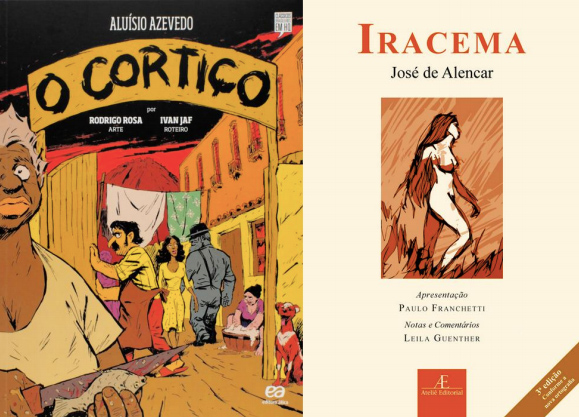
Cover of “O cortiço” by Aluísio Azevedo and “Iracema” by José de Alencar
“O cortiço” by Aluísio Azevedo and “Iracema” by José de Alencar, two pieces that talk about interracial couples and redefined Brazilian history, to the point of still being read nowadays.


In the present times, it is hard to define who is white and who is a person of color in Latin America, since there were whole generations with relatives from many different backgrounds. It is easier for many Latinos to define as white whoever has lighter skin and to define as black whoever has darker skin, which turns the race concept into a superficial debate but also contemplates the local discussions of racial tensions.

Footage of Police brutality in the Chaco region happens
Police brutality in the Chaco region happens, mainly, to people who have native ancestry.


Also in Latin America, people of color are more susceptible to police brutality, and those who have less Caucasian features are definitely the most affected, which is called "portada de cara" in many Hispanic countries.

National authorities must discuss such desolating racial tensions, to find solutions to tackle issues alike.


At last, it is fair to say race is unquestionably a hard-hitting topic in Latin America ever since colonization started. Although there is plenty of diversity on the continent – and it must be celebrated – it is important to understand where and how it was originated and if it is being pleasant to everyone.


There are many changes to be done there to hit racial democracy, but a new generation of politically aware Latinos are already on the frontlines of it, inside and outside of Latin America. That is something to believe in.
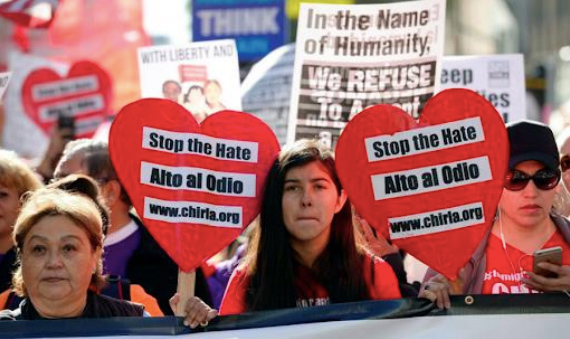
Stop the Hate activists

What are you waiting for?

Sign-up in under five minutes and explore thousands of opportunities in more than a hundred countries and territories.

Sign-up!

Explore more

Global Talent by AIESEC US: Connecting Companies with Global Perspectives

Global Talent by AIESEC US: Connecting Companies with Global Perspectives

Discover how AIESEC US’s Global Talent Program helps companies in the United States host international trainees and interns through the J-1 Exchange Visitor Program. Learn how this fully compliant initiative connects organizations with global perspectives, fosters cultural understanding, and supports professional development without the complexities of direct sponsorship.

How to Build an Internship Program for International Talent: A Comprehensive Guide

How to Build an Internship Program for International Talent: A Comprehensive Guide

In today's interconnected world, globalization isn't just a trend; it's the norm. Businesses thrive on diverse perspectives, and one way to infuse your organization with fresh, innovative ideas is by creating an internship program for international talent. This guide will walk you through the steps to build such a program, highlighting the benefits of international interns, the requirements of the J-1 Visa, and how AIESEC's Global Talent program can streamline the process.

Embracing Cultural Diversity in the Workplace: Unlocking a Wealth of Benefits

Embracing Cultural Diversity in the Workplace: Unlocking a Wealth of Benefits

In today's globalized world, cultural diversity in the workplace is more than just a buzzword; it is a crucial factor that can drive innovation, creativity, and business success. Organizations that embrace cultural diversity can tap into a wealth of perspectives, experiences, and ideas that can lead to improved problem-solving, increased employee satisfaction, and enhanced competitiveness in the global market. In this blog, we will explore the numerous benefits of cultural diversity in the workplace and why it should be a priority for any forward-thinking organization.

By clicking “Accept All Cookies”, you agree to the storing of cookies on your device to enhance site navigation, analyze site usage, and assist in our marketing efforts. View our Privacy Policy for more information.
AIESEC US winter promotional material: Winter Days, Get 100 dollars off your exchange. AIESEC US winter promotional material: Winter Days, Get 100 dollars off your exchange.

What’s a Rich Text element?

The rich text element allows you to create and format headings, paragraphs, blockquotes, images, and video all in one place instead of having to add and format them individually. Just double-click and easily create content.

Static and dynamic content editing

A rich text element can be used with static or dynamic content. For static content, just drop it into any page and begin editing. For dynamic content, add a rich text field to any collection and then connect a rich text element to that field in the settings panel. Voila!

How to customize formatting for each rich text

Headings, paragraphs, blockquotes, figures, images, and figure captions can all be styled after a class is added to the rich text element using the "When inside of" nested selector system.

What are you waiting for?

Sign-up in under five minutes and explore thousands of opportunities in more than a hundred countries and territories.

Sign-up!

Explore more

min. read
Written by